-
Total Contact Saddle
When I first started exercising Luna, who was overweight and unfit after almost four months out of work due to a bout of laminitis, her English saddle didn’t fit well and kept slipping to the right. It wasn’t a great saddle anyway, but it didn’t make sense to buy a new one until she lost some weight.
The Total Contact Saddle (TCS) Community Facebook group had popped up in my feed a few weeks earlier, and since then I had been reading a lot about this interesting gadget. Like everyone who hears about it for the first time, I was concerned about spinal clearance and didn’t quite understand why this saddle didn’t need it. Luckily, the details about its design are well explained on their website, and the FB community is always willing to help new users solve any doubts.
I was skeptical about the one size fits all claim, but since the TCS was much cheaper than any other treeless saddles and seemed to sell easily second hand, I decided to make the investment and asked for permission to exercise Luna in it temporarily. It seemed like a useful tool to have, and I thought I might be able to use it with other horses in the future.
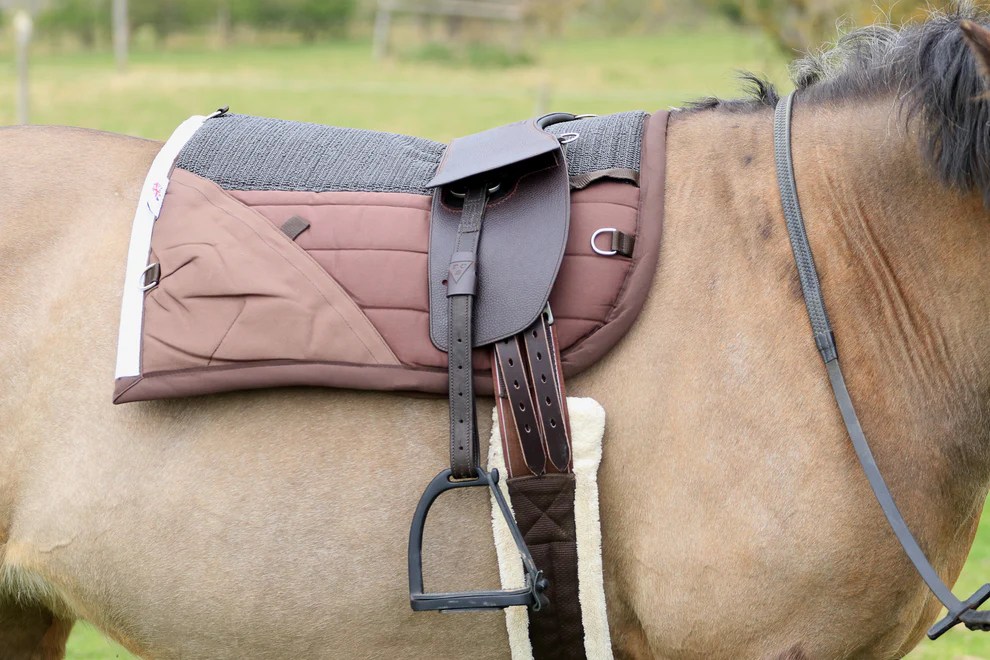
The model I ordered was in stock, and it arrived in only a couple of days. I chose the Havana TCS with short billets to use Luna’s long girths, and also because I wanted to be able to easily tighten the girth after mounting. To be safe, I also ordered a Total Contact Saddle pad and added a gel pad because I read on the Facebook group that some horses might be more sensitive and might need extra thickness.
They say the TCS finds its place after a few rides, and it’s true. Right after the first ride, everything had slipped slightly to the back and seemed to sit in a better place on Luna’s back.
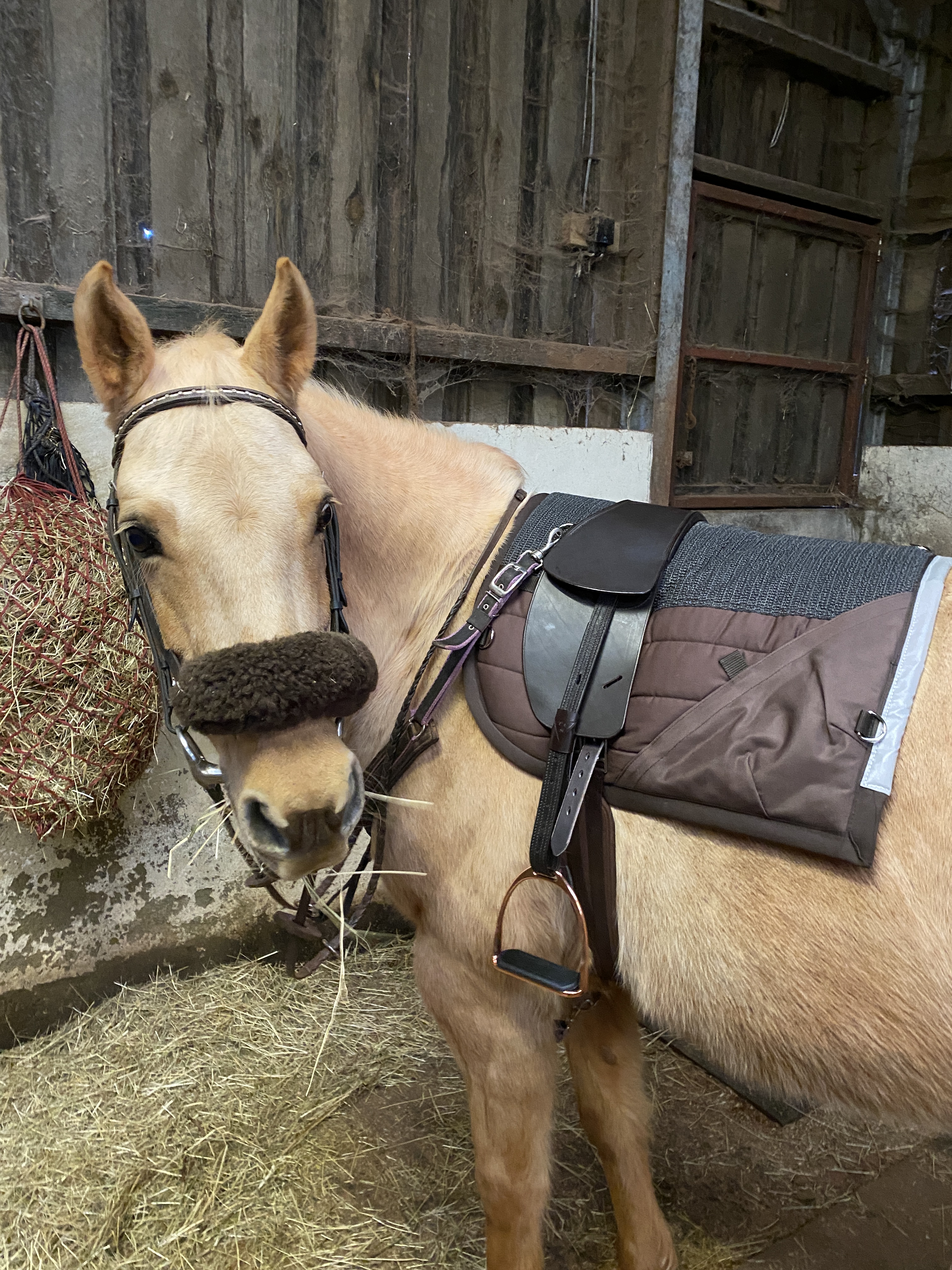
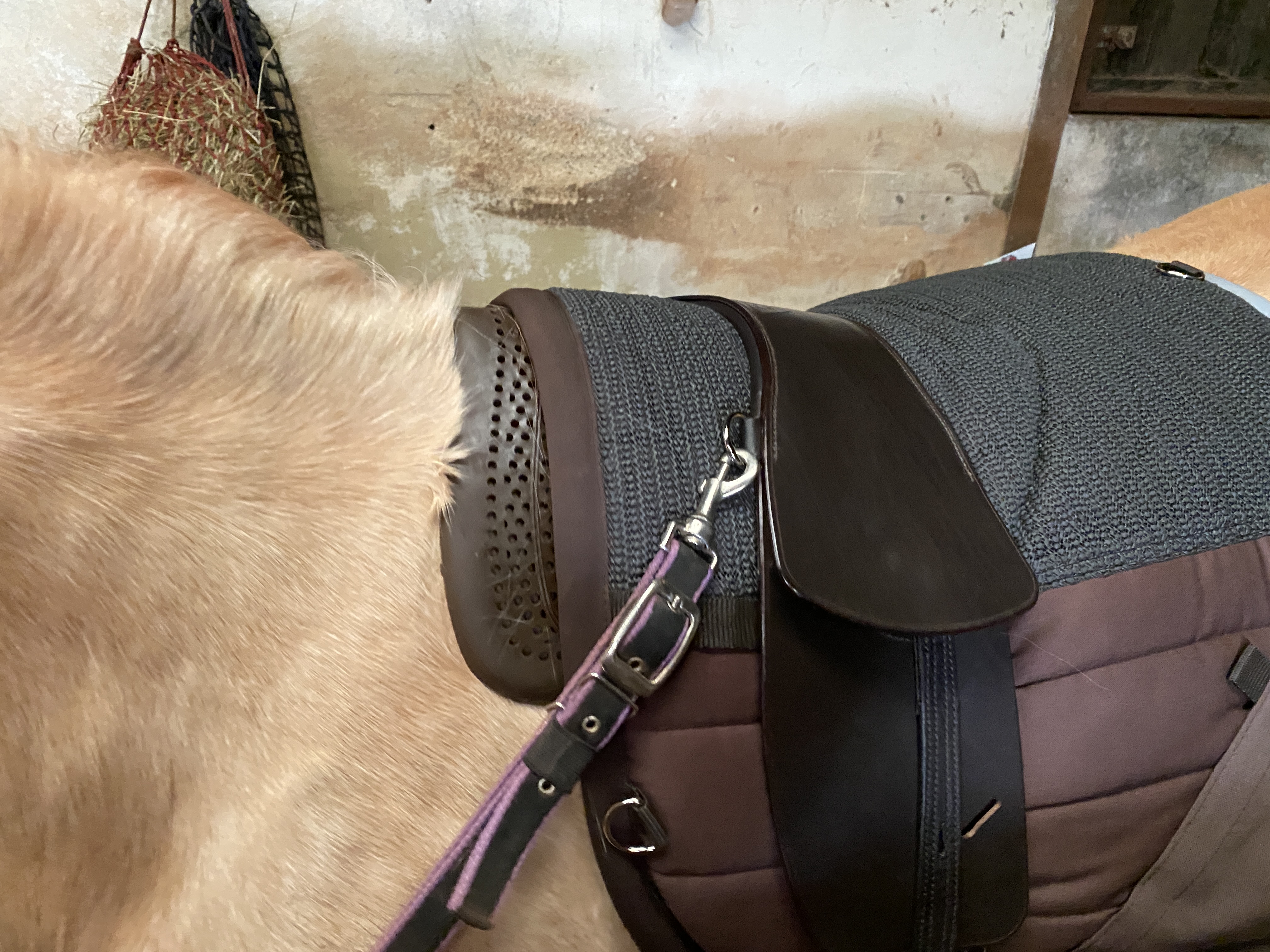
During the first week riding in the TCS, I felt comfortable but a bit weird when posting the trot. I thought that I might feel unsafe without a pommel, cantle, and knee rolls, but amazingly I felt safer than ever when sitting spooks and spins. I guess that the rider’s gravity center is closer to the horse’s gravity center, like when riding bareback, but with the advantage of having the stirrups for balance and to rest the feet during long rides.
The feeling of weirdness while trotting disappeared gradually, but I can definitely tell that riding in a TCS is a more demanding fitness challenge for both the rider and the horse, as both need to engage their cores more than when riding in a regular saddle. In barely two months, Luna was back to her healthy weight, and I had also lost almost 2 stones!
Since the very first ride, Luna felt amazing in the TCS: she could move her shoulders much more freely, and she was much happier, more forward, and relaxed at the same time. The TCS allows you to feel any tension in the horse’s back, so very often you can “feel” a spook coming and prevent it by calming the horse before things escalate.
After a few weeks using it, I tried to use Luna’s old saddle for a lesson, but she pinned her ears back and moved away from me the minute she saw me bringing it to her stable. I am lucky that she’s so expressive because she makes it crystal clear what she likes and what she doesn’t! She loves her TCS, and so do I, so we have kept riding in it for over a year even though this was supposed to be temporary.
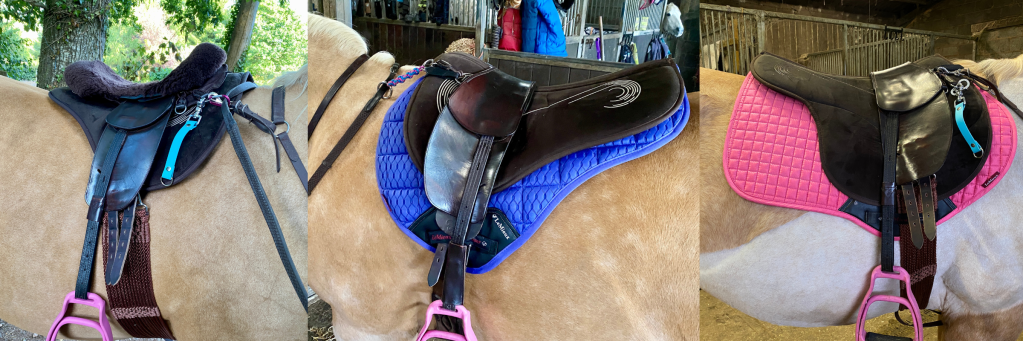
One of the things I like most about this saddle is the endless padding possibilities that you can use, depending on the horse’s sensitivity or the kind of ride or activity you intend to perform each day. I tend to use more layers for longer rides and to keep it simple when the weather is warm or for my lessons. Here you can find a small gallery with some of the padding setups I have been using during this year and a half. I will review some of these pads and combinations in future posts, but I hope that this will inspire you if you have a TCS or are considering getting one.


 The rookie horse owner